About this site

Triathlone training tips – week 1

by the Defence Force Triathlon Association’s Head Coach, Derek Nugent.

Hello there folks, my name is Derek Nugent and I’m the coach for the Defence Forces triathlon team and a member of the local Organising Committee and race director for TriAthlone, back again with some hints, tips and advice to get you through our great event. For those of you who have completed the Triathlone before you’ll be familiar with this advice as I have included the training program and information from last year, with a few edits, and hope that it stands you all in good stead for this, our 7th year running. So, if you haven’t entered our 2012 event, what are you folks waiting on! 

As an organiser, an experienced triathlon participant and a coach I have a unique perspective on what it really takes to complete a triathlon and it is with great pleasure that I’m taking the time to help program and prepare the next wave of “new to the sport triathletes” for their introduction to our great sport.

The following is a short, basic, training program that should help you (as an outline) to get you to the start line of the 2012 Triathlone and see you comfortably swim, bike and run your way to the warm welcome of our finish line. Yippee!

As with all training programs and sporting adventures, before you attempt to train for the event you should visit your local Doctor for a health check and once you’ve been given the “All Clear” you are good to go, train and get ready for race day! Before you attempt this training program please read and be familiar with the Medical considerations here 

So, first off, what kind of equipment will you need to complete your first triathlon? In terms of equipment needed to train for and to complete your first triathlon event, you more than likely have it, or have access to the items I’ve outlined below already. You will need;

  • Swim hat,
  • Goggles
  • Wetsuit (bought/borrowed)
  • Bike (a mountain bike will do, once it has serviceable brakes)
  • Cycling shorts
  • Helmet is a must
  • Broken in pair of trainers,
  • Gear – shorts and t-shirts to train in
  • Stop watch

You will need a stop watch to train with as well to keep an eye on how long you’ve trained for, and a heart rate monitor is a worthy and wise addition to any budding athletes kit bag. If shopping locally in Athlone TriZone carry a wide selection of training products and for those based around the Dublin area there are an excellent choice of stores to meet/for all your triathlon needs.

Before we get into the program itself, remember that it’s only a guideline to train too and don’t worry if you miss a session or two. (N.B Session doesn’t mean what you do post event!) If you get unwell, or feel tired, listen to your body and work on getting better, your fitness will not drop down that significantly and it’s a basic error to rush back too soon which can put you back further. Take care to take onboard enough of the RIGHT calories too, with particular attention to staying hydrated. Be sure to stretch, stretch and stretch again. And remember that we make the greatest gains from our training not when we are doing the training but when we are recovering from it. So remember to chill as well as train.

Heart Rates:

We will be talking about “Heart rates” and “Training Zones” in the program a fair amount so it’s important that you know how to get “it/them” and what “it/them” should be. To work out roughly what your maximum heart rate is you simply take your age away from the number 220. So if you are 40 years of age its 220-40=180. This number is a good indicator of roughly what your maximum heart rate is (we call this number your heart rate maxvor HRMmax) but remember that people are not machines so there will be variation, which is fine once you understand the principle. So if you need to do a workout at 50% to 60% of your maximum (and you are 40 years of age!) its 180bpm (beats per minute) multiplied by 0.5=90 and 180 x 0.6=108. So we know that we need to keep our heart rate between 90-108 b.p.m for the workout. Doing so can indicate a few things but most importantly, you can’t train hard All of the time, our bodies can’t tolerate it. Generally speaking always start any workout gently, with a good warm-up of around 12-15 minutes giving your body a chance to get accustomed to the effort that will come, and ensure to stretch thoroughly. Post training, always make time to cool down properly too, with more stretching, held for longer and a time for your body to relax. Stay hydrated throughout, but more importantly post training your body will be like a sponge, thirsty to replace lost energy so make sure you re-fuel appropriately as well. A personal favourite of mine post training was (edit. still is) chocolate milk, virtually guilt free, but a great post workout treat.

Training Zones:

Finally, how do we know we are training at the right zone or intensity level? Now that we know roughly how to get your maximum heart rate for your age, we can look at using this to give us zones that we can train within.

Zone 1: The lower the heart rate, the longer you can do that type of work, so long runs or swims/spins are done in Zone 1, at an easy pace, one which you could sustain for a long period of time. You should be easily able to chat to your training partner throughout (don’t try this swimming though!) All zone work done here is done at 50-60% of maximum.

Zone 2: This is somewhat more challenging in terms of effort but should be comfortably sustainable from 10-35minutes. Chatting to your training buddy may be a bit trickier to do during these sessions but remember this should be still manageable. The aim here is for 60-70% of your max.

Zone 3: Speed work; This is really only going to be used by us once we have a good base of fitness down, free from injury and coping with our new sport, and once that’s established we will look at doing some shorter, sharper sessions where we will move at 70-85% of our max and for anything between 30 seconds to 2 minutes.

From next week we will be offering you week by week training tips to count you down to the big day.

Week 1: Adjustment… (This is the polite way of saying you may be a little sore: P)

Monday 20min Z1 run
Tuesday 30min Z1 swim
Wednesday 25min run Z1
Thursday Rest
Friday 30min swim Z1
Saturday 45min bike Z1
Sunday Rest

Take the triathlone challenge 2012!

Posted on Thursday, April 26th 2012, by Hugh McAtamney

Tags 2012 training

The Course For 2012

(maps to be published when confirmed with local authorities)

The Swim

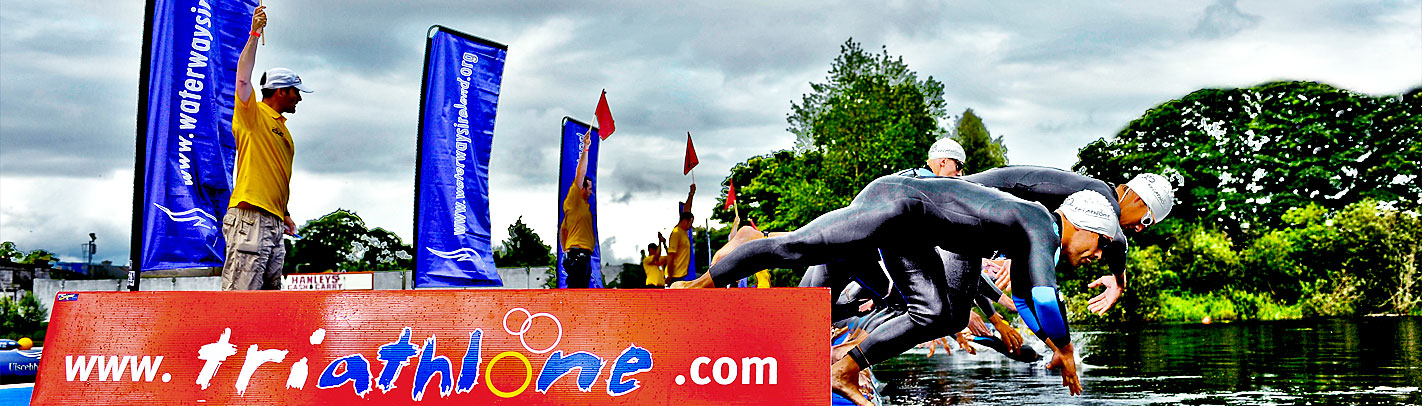
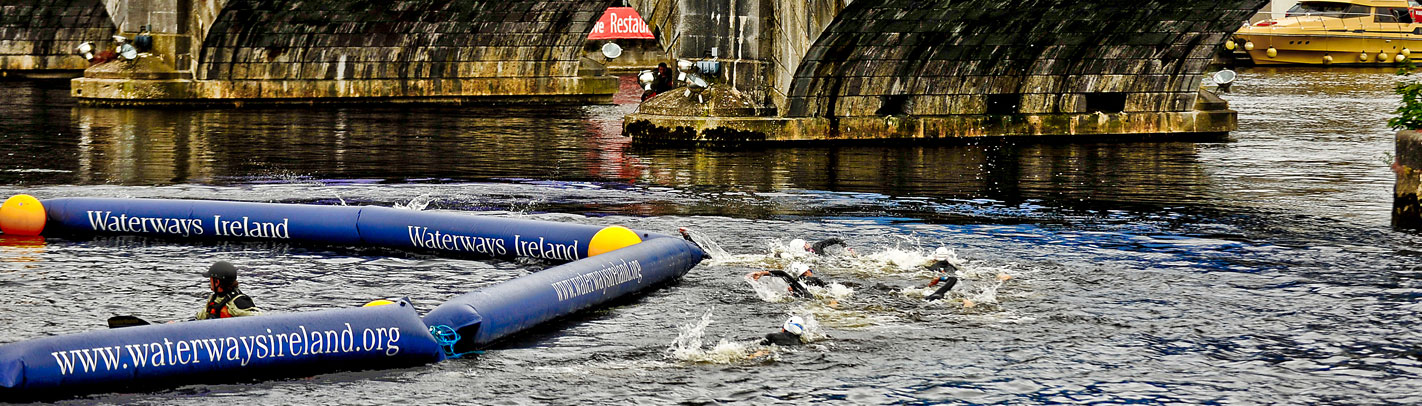
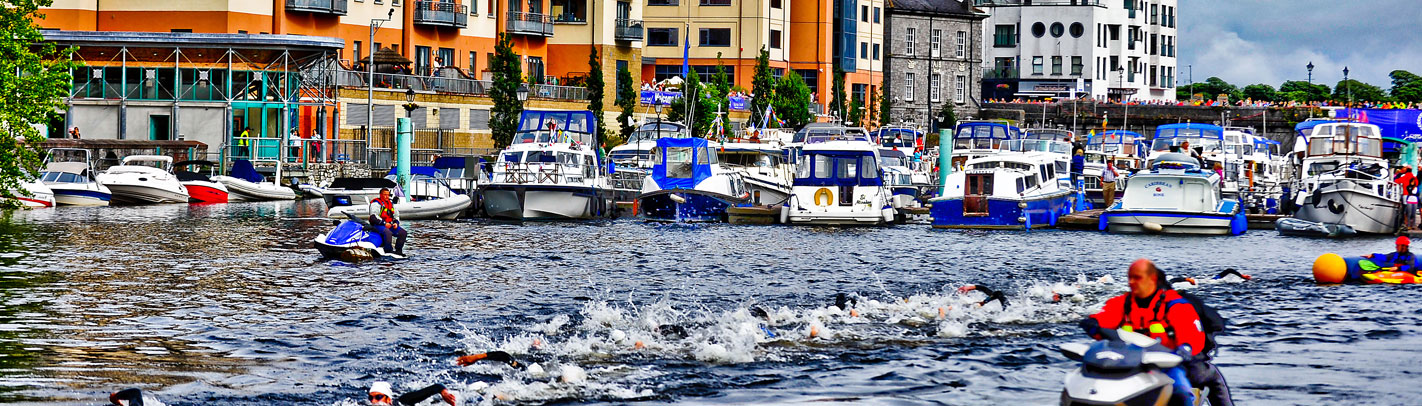
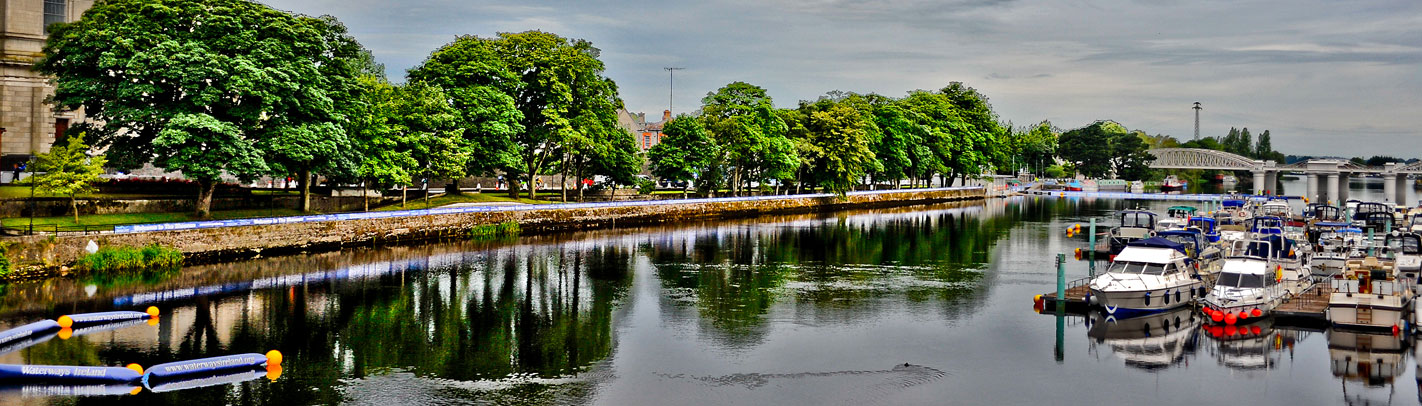
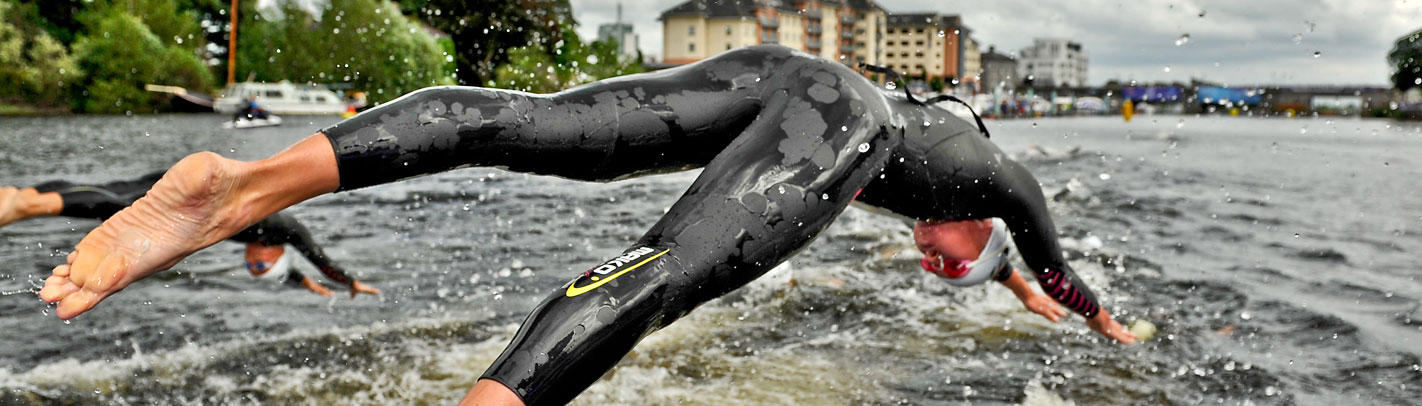
The swim starts 750m upstream where we will be creating a new swim entry infrastructure. With the flow of the river being an issue in previous years we have traditionally used this as an alternative entry point. This means for our sprint athletes the swim will be 100% downstream. Sprint distance athletes swim the 750m down stream and exit at the athlone boat club. Time to get some PB’s

For the Standard Distance race, athletes will swim a further 350m down past the sprint exit to the main bridge across the town and then turn to swim back upstream to exit onto the pontoon.


The Bike
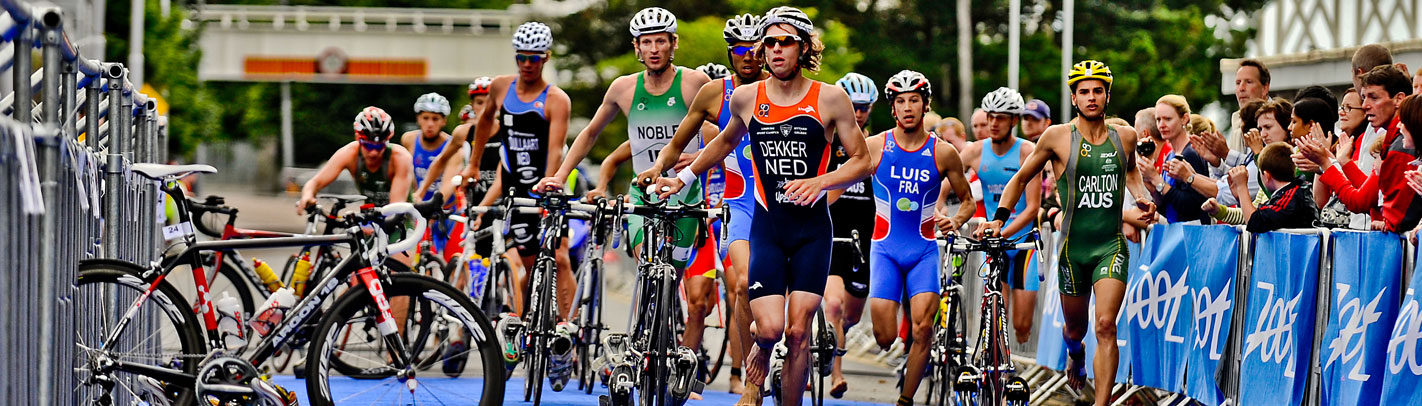
The course this year will be held on fully closed roads. The course sets off from Transition area inside the army barracks on Grace Road, and continues out the Galway road.

Standard distance athletes will turn at 20km and come back in on the same route. Everyone else turns at 10km out.


The Run
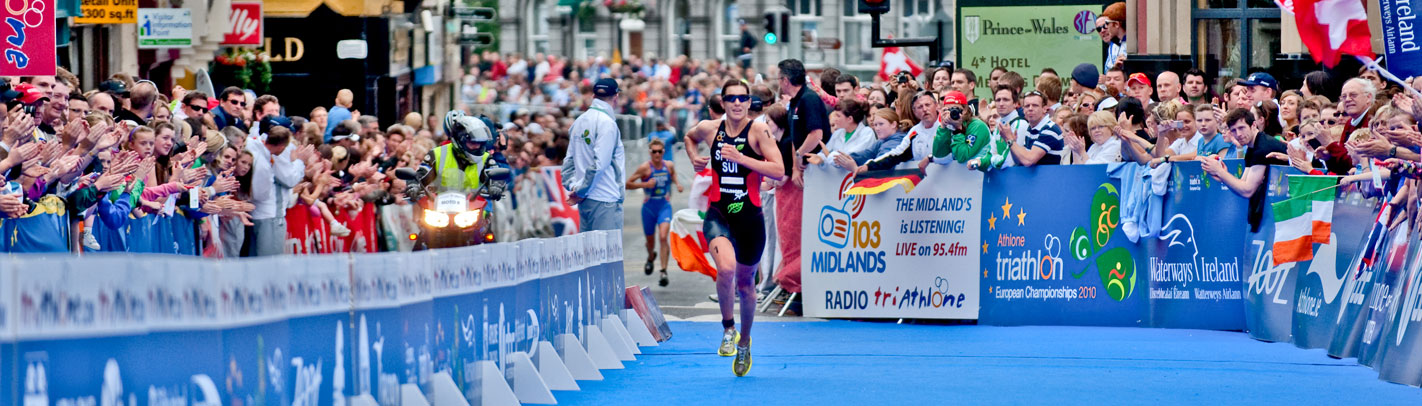
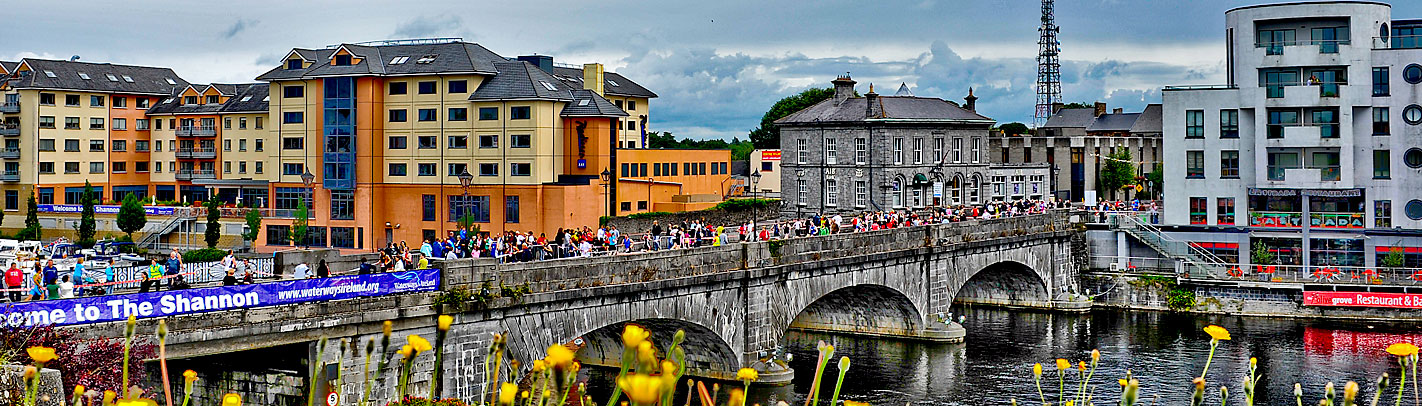
Our most exciting part of the race is our run route. The narrow town centre streets of Old-Athlone’s “West-Bank” plays host to the event once again. Olympic distance Athletes will exit the army barracks onto Grace road where they will complete four laps of the course. The first lap starts when you get to the finish line. Athletes run past Athlone’s historical Castle, down and back up Grace Road along the banks of the River Shannon, before crossing into Leinster and onto Church Street where the Finish, Recuperation and Baggage-Drop area is at the Civic Centre Plaza in the shadow of the stunning new Athlone Town Centre. This route will create a fantastic atmosphere as spectators will see athletes a total of 3 times every lap.

Posted on Friday, January 27th 2012, by Hugh McAtamney

Tags 2012 course